How To Rewild Your Lawn

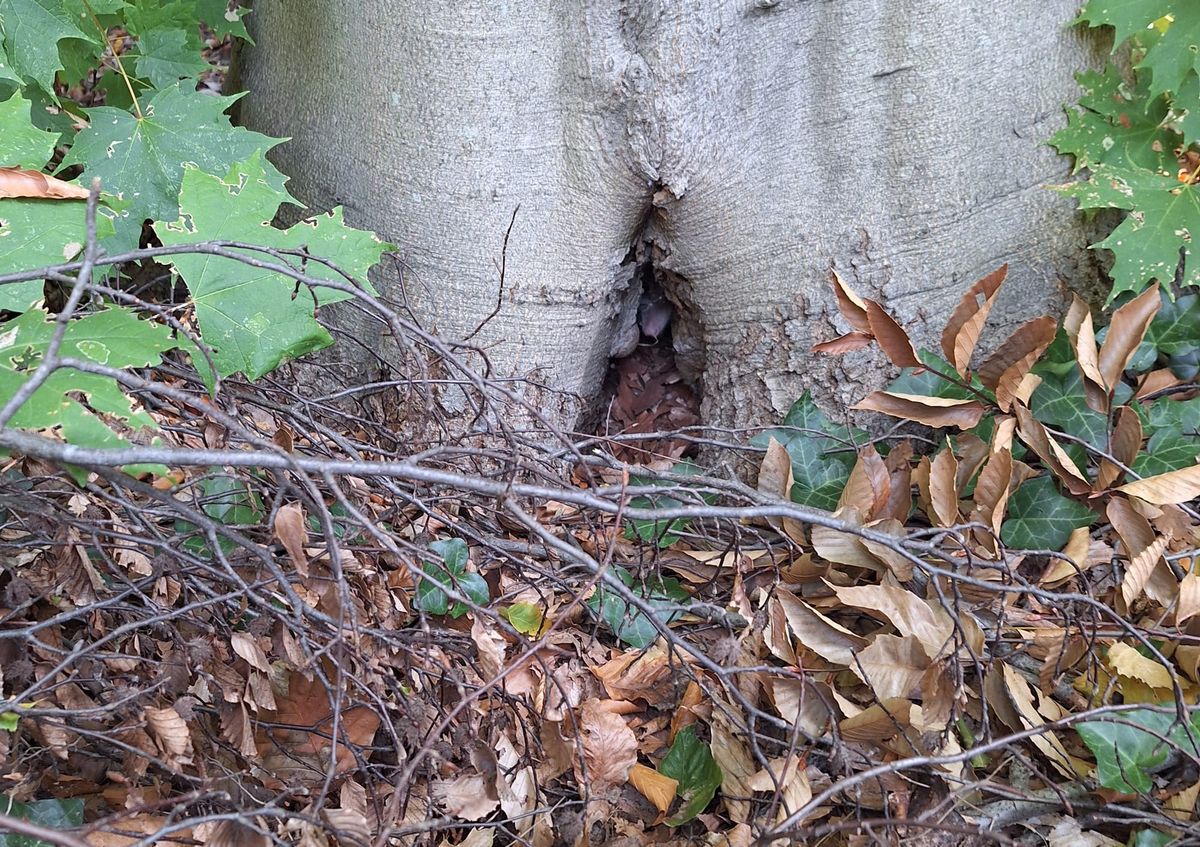
"Whether you are walking, standing, sitting, or lying down the earth will speak. You may give it expression or not. It is your choice.(1)"
What does the philosophy of landscape rewilding ask us to do? In a word, listen. We need to observe the natural landscape around us and learn about our local plant and animal communities. Many landscaping books recommend creating a meadow-like environment instead of mowed grass lawns. However, where I live in southern Michigan, the natural succession of the ecosystem ensures that meadows will almost always be overtaken by tree seedlings in the absence of burning or grazing. If we are seeking to return the landscape to plant communities that can maintain themselves, rather than require work from humans, we need to look around us and see what our native ecosystems are doing.
In short, desert ecosystems should be returned to desert, forest ecosystems should be returned to forest, and et cetera. Rather than the particular aesthetics of current landscaping trends, we should focus on fostering long-term, healthy, native ecosystems. In your area, observe the process of ecological succession. What do new or recent construction sites look like? This is the first stage, where weeds quickly move in to stabilize broken soil and provide a green bandages for the wounds we inflict on the landscape. Roadsides and other areas that are infrequently mowed show secondary levels of succession, where longer-lived plants return.
More advanced stages of succession are represented by preserves and parks. These can be as varied as Anzo-Borrega Desert State Park in California with its bare rock formations and cacti bursting with spines, or Quoddy Head State Park in Maine with thick ocean fog that descends over sub-arctic bogs. No singular garden plan could encompass the full tapestry of ecosystems that blanket the United States, so any gardener who wants to restore their corner of the ecosystem should always begin by learning about their particular surroundings.
After observing the type of ecosystem in your area including types and succession, watch the way the landscape goes through its life cycles. Try to observe and appreciate dead and dying plants. Watch how they disintegrate and are eaten by fungi and insects. Appreciate how the plants and animals return to the soil, a creative chaos that starts the life cycle over again. Observe how plants and animals reproduce, when seeds are spread or fawns emerge. Acting within the life cycles of the landscape makes it easier to steward or enhance it. Planting acorns in October will result in more oak seedlings than planting them in March, for instance, and pruning trees in the winter when ice normally breaks weak branches will create healthy spring growth.
The next thing rewilding asks us to do is turn our observation inward. Humans are just as integral a part of the landscape as cardinals or pines. Reflection and contemplation on our own lives can also be an act of listening to the landscape. When we reflect, let's question the reasons we desire to control the landscape around us. Maybe we feel that we have to conform to social standards to maintain our status in the community. Maybe we feel threatened by the exuberance and power of nature. Let's question the values and assumptions that we have learned that push us toward controlling the landscape. Moving into a different relationship with the land is very difficult, but it is also deeply rewarding.
I believe that a desire to control the natural world is learned in American culture. Capitalism and colonialism work hand in hand to convince us that the free gifts of nature must be replaced with expensive, energy-intensive processes. For example, some believe that it is socially and aesthetically superior to clear everything around our home and pay landscapers to install exotic plants which will require endless inputs of work and money to maintain. This doesn't mean we should vilify landscapers, merely that we should interrogate a system that values productivity and constant work over the actual outcomes for humans and the land.
Listening to the land, and to our own feelings and desires must finally be complemented by listening to the voices of those with different experiences, cultures, and beliefs across society. Land use is so intimately tied to how we humans interact with each other that it is impossible to fully separate ecology and society. From peasant land dispossession in industrializing England, to the genocidal land theft campaigns of the colonial United States, human relationships are land relationships. Today some of the most polluted sites in America are located in Black and Indigenous communities(2).
Tending to the garden of our political relationships is just as crucial for environmental restoration as planting seeds. Finding solidarity with and care for each other establishes deep roots from which action can grow. Beloved communities of care can include both seed-saving and anti-racist action. Both are necessary to affirm our interconnectedness. There are many forces in our society that try to rend that realization of mutuality. Racism separates people based on color, capitalism separates working-class people from the wealth of natural resources, and industrial landscaping separates people from the native ecosystems they inhabit. Weeding is one particular way we can enact this separation.
"Weed” is word that describes our relationship to the landscape. We fear weeds taking over, getting out of control, looking messy, or making an area look abandoned. It has a lot to do with fantasies of purity or righteousness within ourselves, but little do do with plants. Wilderness historian Roderick Nash traces the etymology of the word 'wilderness' to the fear that the landscape can never be dominated by human will. He writes; "In the early Teutonic and Norse languages, from which the English word [wilderness] in large part developed, the root seems to have been "will" with a descriptive meaning of self-willed, willful, or uncontrollable.(3)"
In our desire to control the Earth, we have failed to ensure that control is really beneficial. The paradoxical nature of lawn care is that by trying to signal communal responsibility, we are actually harming our community. Lawn anthropologist Paul Robbins writes: "Herbicides that flow off of lawns and represent a hazard to the collective good are represented as fundamental to "proper" community behavior.(4)" The control mindset ignores the fact that lawn chemicals can poison children and suffocate lakes, and instead focuses on the profit-boosting pesticide sales and superficial aesthetics.
Giving up that control is a small gesture. Individual choices like restoring native plants to a suburban lawn are not enough to solve huge problems like climate change and environmental racism. We must also look to community building and political action across the country and the globe. But a healthy landscape built on compassionate listening can be a stepping stone towards that greater political shift. Prefigurative politics refers to forming relations that demonstrate a desirable future. Working toward one lawn's worth of ecological restoration is an attainable goal that can both provide tangible benefits and help people see a different path forward.
Learning humility and practicing listening when it comes to the landscape means letting go of learned aesthetic ideals that are causing environmental degradation and instead working to understand our landscape relationships. Worster writes; "Being clever and adaptable, we have learned how to make substitutions in our dependencies and to alter the geography of our dependency ...but we have not learned how to live on a planet that is dead.(5)" Rewilding is a way to live with a lively planet; to give up control and find reciprocity instead.
- Zenju Earthlyn Manuel, "Zen," zenju.org/zen, Accessed December 29, 2018.
- Dorceta Taylor, "Toxic Communities: Environmental Racism, Industrial Pollution, and Residential Mobility," (New York: NYU Press, 2014).
- Roderick Frazier Nash, "Wilderness and the American Mind," (New Haven: Yale University Press, 2001) 1.
- Paul Robbins, "Lawn People: How Grasses, Weeds, and Chemicals Make Us Who We Are," (Philadelphia: Temple University Press, 2007) 95.
- Donald Worster, "Nature's Economy: A History of Ecological Ideas, 2nd Edition" (United Kingdom: Cambridge University Press, 1994) 430.