
Is Native Plant Landscaping Xenophobic?
Updated: May 15

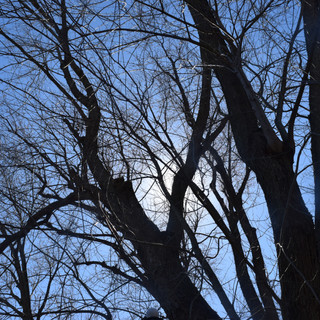
Graffiti on a brick building behind broken weed trees
As the crisis of fascism deepens in the United States, anti-social behavior is the norm. While the left scrambles to hold back an avalanche of human suffering, the right wields the power of billionaires to destroy any scrap of compassion, solidarity, or common cause that still exist in American society.
When I think about gardening, I picture being alone with nature. It feels like tuning out the human world and tuning in to something deeper. Rewilding projects feel like the lonely garden on an enormous scale. They exclude most human activity, and even try to erase the signs we were ever there. Rewilding project try to make amends for the harm humans have caused; invasive species, overgrazing, industrial pollution.
So I have to ask myself: is landscaping anti-social? Does the rewilding work to exclude people from the landscape come from this hyperconnected yet divided society we live in?
Some ecologists believe that concern over invasive species is actually redirected human xenophobia. There's absolutely a historical basis for this belief. The Nazis employed landscape architects to ensure that even their most horrific constructions supported native German plant landscapes. Biodynamic farming, a Nazi invention, is still popular within the sustainable and organic agricultural industry. Ecofascism is like when the worst person you know makes a good point - it makes you reexamine everything you believe.(2)
Two pillars of fascism are the obsession with purity and the return to an imagined past - perfect stepping stones to environmental conservation. What eco-fascism lacks, though, is an appreciation of the global interconnectedness of the environment and of course an understanding of the shared humanity of our entire species. As with all strains of right-wing thought, it requires an abandonment of inconvenient material realities and rigorous science.
To prevent this pollution in our garden, we have to grab the evidence tight with one hand and our humanity with the other. That's why the copious documentation of real harms caused by invasive species is so important. There is rigorous, globally collected scientific evidence of the harms to humans and the environment caused by invasive species. Cooperation by scientists across the world is the only way to understand our interconnected global ecosystem and how our continued flourishing as a species can only come from cooperation.(3)
The claims of xenophobia leveled against native-plant activists are semantic. Claims against invasive species mimic claims against human immigrants - they overpopulate, they crowd out others, they are sometimes toxic. The difference is that invasive species claims are actually true. Language changes might help the issue, but it's difficult to offer a stronger rebuttal than the evidence we have that invasive species DO overpopulate ecosystems, leading to the death of local communities.(4)
We can anthropomorphize an invasive species like garlic mustard in Michigan, choosing to see it as a plucky immigrant. Garlic mustard is edible, commonly used to make a delicious pesto. It produces a cute little flower, and is excellent at preventing erosion on hillsides. How could people hate such a lovely little newcomer? Don't they know that Asian plants are just as good as American ones?
Actually, that's not the argument against invasive species. The issue is not the fundamental value of the plant, but the landscape relationships it can participate in. Garlic mustard outcompetes native plants like bee balm, downy violets, or black-eyed Susan. Fewer native flowers means fewer hosts for the insects which only native flowers can support. Fewer insects mean fewer birds, and so on. It is in this way that a plant which has not evolved to be in relationship with the ecosystem impoverishes the diversity around it.
Another fundamental misunderstanding at the heart of the xenophobia claims is about species. Conservationists are interested in exotic vs. introduced species while, obviously, human beings are all the same species. The ecological implications are not trivial or semantic. Also unlike humans, plants are not migrating themselves. They're often being purposefully sold as ornamentals (purple loosetrife, Norway maple, Callery pear, butterfly bush).
So how can rewilding efforts, international and data-driven as they are, be social? What role can the healing landscape play in combating the anomie of our age? I would point to efforts like the volunteer rewilding weeks hosted by Trees For Life in Dundreggan, Scotland. These pop-up communities of volunteers come from all over the UK and the world for the common goal of tree planting. Fostering both an understanding of the native landscape and an understanding between people should be the highest aspiration of any rewilding project.(5)
It's my wish that we can find a more human future in our lonely landscapes. I hold tight to humanity when following the scientific evidence, and I hope.
Merriam-Webster Dictionary. (2019). Merriam-Webster.com. http://merriam-webster.com
Staudenmaier, P. (2020). Advocates for the Landscape: Alwin Seifert and Nazi Environmentalism. German Studies Review, 43(2), 271–290. https://doi.org/10.1353/gsr.2020.0044
IUCN. (n.d.). Invasive Alien Species | IUCN. Iucn.org. https://iucn.org/our-work/topic/invasive-alien-species
Simberloff, D. (2003). Confronting introduced species: a form of xenophobia? Biological Invasions, 5(3), 179–192. https://doi.org/10.1023/a:1026164419010
News and blogs from Trees for Life. (2025, December 5). Trees for Life. https://treesforlife.org.uk/about-us/news/


