
My Visit to the Highlands Rewilding Bunloit Estate
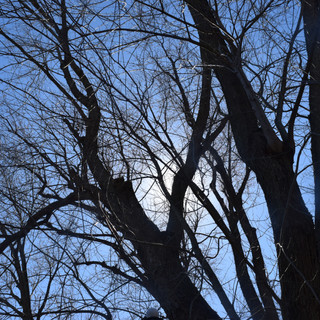

I was incredibly lucky to visit the Bunloit Estate, managed by Highlands Rewilding, for a few days during my recent trip to Scotland. We stayed at the Wester Farmhouse, managed by Interhome. The bus from Inverness sped us along the shore of Loch Ness, and dropped us at the quiet village of Drumnadrochit. The landlord of the local pub was kind enough to call us a taxi, and we handed her the printout of step-by-step instructions to get to the cottage that technically doesn't have a street address.
Our ears popped going up the narrow switchback country road, which was bounded by miles of hand-stacked stone fences. After a rumbly cattle grate, we turned into the farmhouse driveway and plunged into the most spectacular view I have ever experienced.

The narrow Loch is bounded on each side by steep mountainsides, like a deep gully in rain-washed mud. Prickly, vivid yellow gorse barricades the cliffsides in thickets like walls, where greenfinches and linnets perch to sing. The gentle, glacier-eroded peaks of the Cairngorms nestled into drifting rainclouds. We watched the rainstorms glide toward us, sprinkle a few minutes of cool rain overhead, and move on.

Our cozy cabin was heated by a charming little fireplace, where I placed some gorse branches in a traditional celebration of May Day which had just passed. Thankfully the jet lag still had my schedule messed up in such a way that I woke up at 5am, ready to go with my camera and my bird identification apps.
It was so strange to be surrounded by unfamiliar birdsong. Chick-a-dee-dee-dee was replaced by chiff-chaff, and instead of a mourning dove coo, a cuckoo! Sessile oak dripping in oakmoss instead of white oak, Scots pine instead of red pine.

Stepping off the trail for a moment to capture a photograph of the flakey Torridonian sandstone, I felt a shocking wet squish. The meadow we were walking alongside was actually a peat bog, restored by the estate by removing introduced Sitka spruce. Wet boots were a small price to pay for these photos of the luxuriously moss-draped stones. These sandstone layers are so old that they contain no fossils, because they were laid before complex life existed!

The air was fragrant with sweet gorse and alive with birdsong. We even startled a wild hog, whose indignant snorts we could hear so close despite being completely concealed by the gorse and broom.
As stunning as I found the grand vistas, the dramatic geologic tear of the loch, the bounding red deer, it was the little things that kept calling my fascination. Tiny mining bee tunnels in the exposed red soil, dainty heather flowers, lacy tangles of oakmoss dripping from the trees. I love being immersed in exploration. Walking 50 feet, you can see worlds in worlds. There is so much life to see, so many new beings to learn about, if we slow down and open our senses.

The UK and the US have some interesting differences when it comes to conservation, restoration, and rewilding. In the US, the 1995 reintroduction of wolves to Yellowstone marked an important turning point in the story of humanity's relationship with the land. When conserving no longer seemed sufficient in a landscape of extinction, restoration offered hope. The reintroduction was really shocking coming from a government that had done so much to destroy.
Ten years later, in the UK, Isabella Tree and her husband began a project of rewilding their Sussex estate, and in 2018 her book Wilding was published. Like Bunloit, Tree's rewilding project was located on a feudal plantation where farming was no longer profitable. Their nonprofit, Rewilding Britain, is a now leader in the rewilding movement.

Where the US restoration projects are driven by career civil servants in departments dedicated to preserving America's grand wilderness, UK projects are often a form of noblesse oblige from aristocrats who happen to have a love of nature. Both of these sources of restoration seem incredibly capricious.
Should these wild places, and actually our entire planet, be at the whims of a few oligarchs? I am heartened by Ecuador's 2008 constitutional declaration of the rights of nature. The heather, the willow warbler, the loch - they have a right to exist. These worlds which we are privileged to look in on from time to time have their own purposes, their own selfhood. To revel in their existence, I believe, is to truly appreciate our own.

Highlands Rewilding. (retrieved 2026, May 18). Bunloit. Highlands Rewilding highlandsrewilding.co.uk/bunloit-estate.
Interhome. (retrieved 2026, May 18). House Wester Bunloit
Bunloit, The Highlands, United Kingdom. https://home.tg/go/yx2e52p6z.
Wild Scotland. (retrieved 2026, May 18). Plants and Habitats. Wild Scotland. wild-scotland.co.uk/wildlife-nature/plants-habitats.
Mendum, J., Merritt, J., & McKirdy, A. (2006). Northwest Highlands: A landscape fashioned by geology series. Scottish Natural Heritage. May 18, 2026, https://www.scottishgeologytrust.org.
Hendry, Luisa. [@Scottishgeologist]. (2025, Aug 11). The geology of Scotland - The Torridonian Sandstones. [Video]. Youtube. https://youtu.be/oR5N-JyqJXk.
Kauffman, Craig, Catherine Haas, Alex Putzer, Shrishtee Bajpai, Kelsey Leonard, Elizabeth Macpherson, Pamela Martin, Alessandro Pelizzon & Linda Sheehan. Eco Jurisprudence Monitor. V2. (2026). Distributed by the Eco Jurisprudence Monitor. https://ecojurisprudence.org/initiatives/ecuador-constitution.


